
Learning involves using three to four of the nine Intelligences evolved by Howard Gardner like :
This involves the ability to use words effectively, both in writing and speaking. People strong in this intelligence are often good storytellers or writers.
This type includes skills in reasoning, problem-solving, and working with numbers. It’s common in mathematicians and scientists.
Individuals with high spatial intelligence can visualize and manipulate objects in their minds. They often excel in fields like art, architecture, and engineering.
This involves using one’s body effectively, as seen in athletes, dancers, and surgeons. These individuals are skilled in physical coordination and movement.
This relates to sensitivity to rhythm, pitch, and melody. Musicians and composers typically have strong musical intelligence.
This intelligence is about understanding and interacting well with others. It’s crucial for teachers, social workers, and leaders.
This is the ability to understand oneself, including one’s feelings, motivations, and goals. People with strong intrapersonal intelligence often reflect deeply and are self-aware.
This relates to the ability to recognize and classify plants, animals, and other aspects of the natural world. It’s often seen in biologists and environmentalists.
Learning through moral values. Sensitive towards fairness and justice
Learning Designed Around Your Child - A Whole-Child Approach to Early Years Education
At Little Wonders International, we believe that every child is unique. Children learn, think, communicate and express themselves in different ways, and our curriculum is designed to celebrate and nurture those differences.
Our Early Years Curriculum brings together thoughtfully selected ideas from Montessori, Waldorf, Play-Based Learning, Experiential Learning and Howard Gardner’s Multiple Intelligence Theory to create a balanced, meaningful and child-centred learning experience.
We don't believe in a one-size-fits-all approach. We believe in creating an environment where every child can explore, discover, express, connect and grow.
Learning Through Different Ways
Our curriculum draws inspiration from complementary approaches to early childhood education, bringing together their strengths to create a rich and engaging learning experience.

Montessori
Independence • Hands-on Learning • Self-Exploration
Children are encouraged to make choices, work with their hands, develop practical skills and discover concepts through independent exploration.
Waldorf
Imagination • Creativity • Rhythm • Storytelling
Stories, imagination, creativity, rhythm and meaningful experiences nurture children's natural sense of wonder and expression.

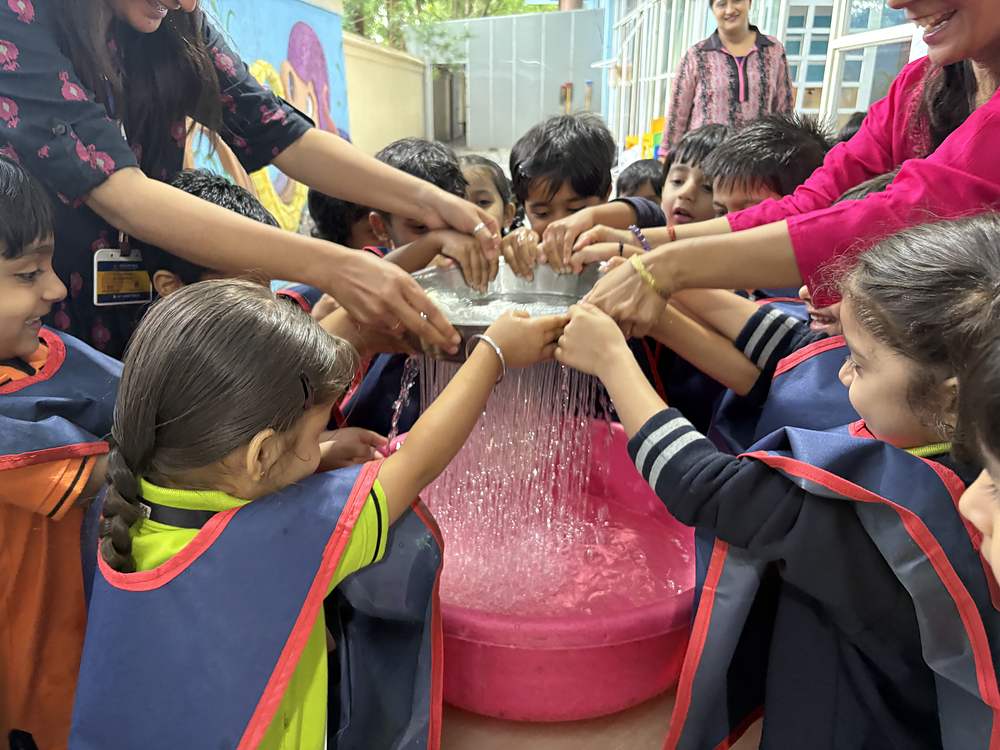
Play-Based Learning
Curiosity • Exploration • Discovery
Play is a powerful way for young children to make sense of the world. Through purposeful play, children investigate, experiment and learn naturally.
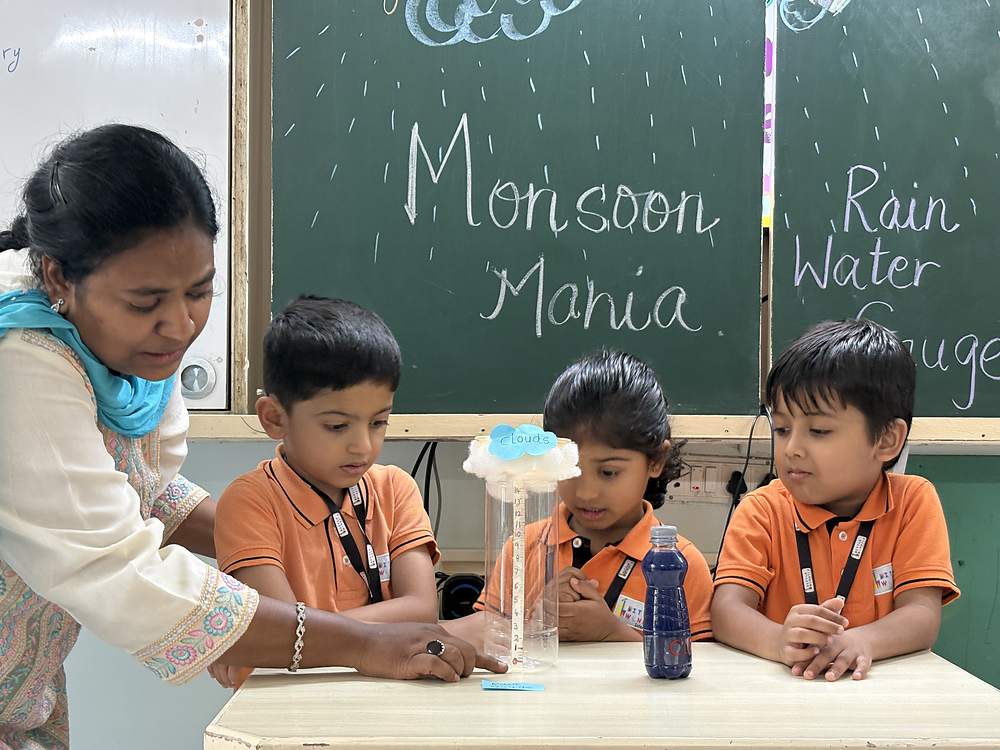
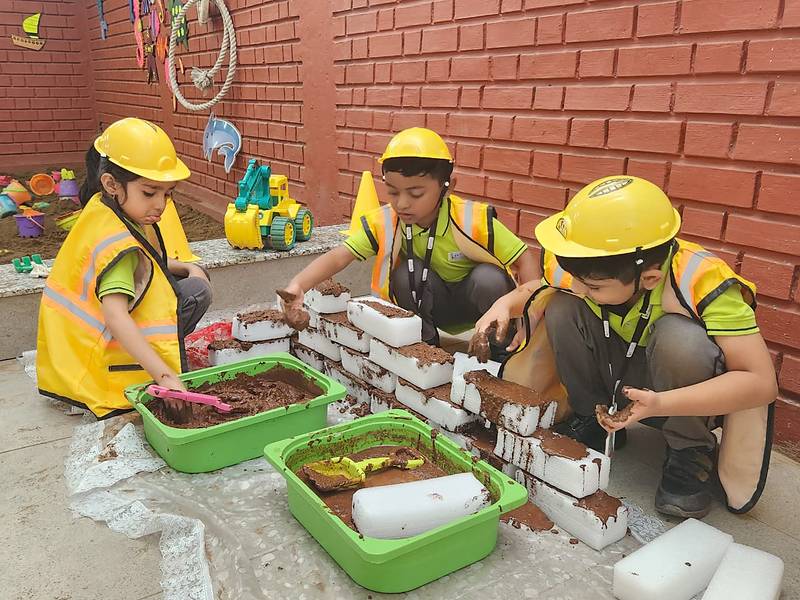
Experiential Learning
Learning by Doing • Real-World Experiences • Problem-Solving
Children learn best when they can experience concepts first-hand. Our curriculum creates opportunities to observe, participate, experiment and apply learning in meaningful contexts.
Multiple Intelligence Theory
Individual Strengths • Diverse Abilities • Multiple Ways of Learning
Inspired by Howard Gardner's Multiple Intelligence Theory, we recognise that children can demonstrate their abilities in different ways.
Every Child Has a Unique Way of Learning
Children may express their strengths through:
Language — communicating, listening, storytelling and expressing ideas
Logical Thinking — questioning, reasoning, observing patterns and solving problems
Movement — physical activity, coordination and hands-on experiences
Music — rhythm, sound, songs and musical expression
Creativity — art, imagination, design and self-expression
Relationships — collaboration, empathy and understanding others
Self-Awareness — recognising feelings, preferences, strengths and individuality
Nature — observing, exploring and developing a connection with the natural world
Our curriculum provides opportunities for children to experience and develop these diverse abilities while discovering what interests and inspires them.
A Blended Approach, Designed for the Early Years
Rather than following one philosophy rigidly, we combine meaningful elements from different approaches to create our own blended approach to early childhood education. Children learn through play, movement, conversation, observation, creativity, exploration and real-world experiences. The focus is not just on what they learn, but on how they learn, how they feel and how they grow.
Growing the Whole Child
Our curriculum nurtures the many dimensions of a child's development.
Cognitive Development - Building curiosity, thinking, reasoning, questioning, concentration and problem-solving skills.
Social & Emotional Development - Nurturing confidence, empathy, communication, relationships, emotional awareness and a sense of belonging.
Physical Development - Developing movement, coordination, motor skills, body awareness, practical abilities and independence.
Creative Development - Encouraging imagination, self-expression, music, art, storytelling, creativity and original thinking.
Individual Potential - Recognising each child's unique personality, interests, strengths, pace and ways of learning.
Our Belief:
Children Are Not One-Size-Fits-All.
Every child has their own pace, personality, interests and strengths.
We believe early education should give children the space and encouragement to discover who they are, how they learn and what they can do. When children are given meaningful opportunities to explore, make choices, ask questions, create, collaborate and try again, learning becomes more than an academic experience—it becomes part of their growth as individuals.
"The curriculum should fit the child. Not the child fit the curriculum."
From Playgroup to Senior KG
Early Years Education | Whole Child Development | Child-Centred Learning
At Little Wonders International, we create a learning environment where every little wonder is encouraged to explore with curiosity, learn with confidence and grow in their own unique way.